How to get people to actually see your content on Flipboard
How to get people to actually see your content on Flipboard
You did everything right.
You created a magazine with a clear topic. You flipped your articles. You wrote captions. You showed up consistently. And still, the traffic is a trickle. A few clicks here, a handful of views there, and a quiet sense that something is missing.
The problem is almost never your content. It is that good curation alone is not a distribution strategy.
This post fixes that.
First, understand how Flipboard surfaces content
Flipboard is not a search engine. It is not a chronological social feed. Content does not appear simply because you published it. Discovery happens through three main paths, and if you are not thinking about all three, you are leaving most of your potential audience on the table.
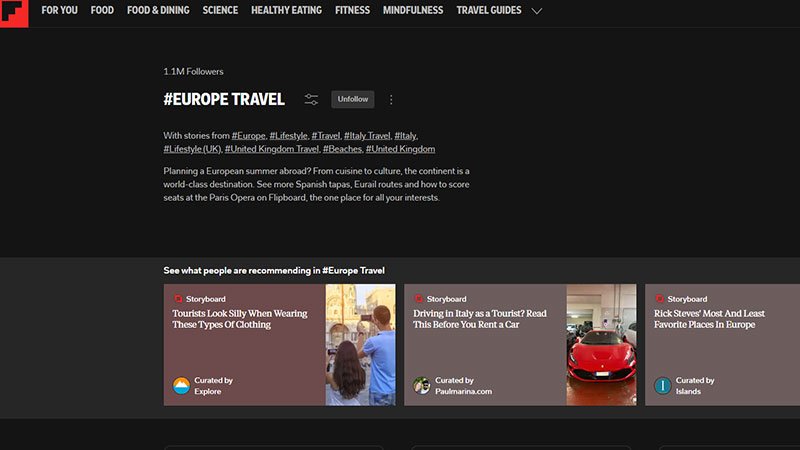
Topic feeds. When you flip an article into a magazine, Flipboard assigns it to relevant topic feeds based on your magazine's tags and the article's content. A well-tagged magazine on slow travel feeds directly into Flipboard's Travel topic, where readers who follow that topic will encounter your content organically.
Magazine follows. When someone follows your magazine, your new flips appear in their For You feed. This is your most reliable audience. They opted in. They want what you curate. Every new follower is compounding visibility.
Reflips. When another curator reflips one of your articles into their own magazine, your content travels to their audience. This is the most powerful organic amplifier on Flipboard. One reflip from a curator with ten thousand followers can send more traffic your way than a week of your own flipping.
This is also where FediBoard's Reflip Copilot becomes essential. Managing reflip campaigns across ten or twenty magazines manually is how curators burn out. The Copilot lets you select a magazine list and reflip in one clean, controlled session. You stay in charge of every flip. The friction disappears.
Understanding these three paths changes how you approach everything that follows.
Your magazine cover and title are doing more work than you think
Before anyone reads your content, they see your magazine. And on Flipboard, first impressions are almost entirely visual.
A blurry cover image, a generic title like "My Articles", or a vague description that could apply to any magazine in your niche will cost you followers before they even arrive. People make the follow decision in seconds.
A few things that actually matter:
- Cover image: High quality, visually striking, directly related to your topic. Flipboard allows you to set any flipped image as your cover. Choose one that stops the scroll.
- Magazine title: Specific and searchable. "Solo Travel in Southeast Asia" tells a reader exactly what they are getting. "Travel" tells them nothing they could not find in ten thousand other places.
- Description: One or two sentences that speak directly to the reader you want. What will they find here? Why should they follow this magazine and not the next one?
Your magazine is your storefront. Dress it accordingly.
Consistency beats volume every time
This is the lesson most new curators learn the hard way.
Flipboard does not reward bursts. Flipping fifty articles in a single weekend and then disappearing for two weeks produces far less than flipping five articles every weekday, week after week. The algorithm tracks activity patterns. Readers build habits. Both reward the curator who shows up regularly over the one who shows up spectacularly once.
The real-world proof is not hard to find. One travel blogger went from 40 visitors from Flipboard in August 2025 to over 150,000 in January 2026. The change was not a viral moment. It was a steady publishing rhythm maintained over time. She started curating consistently, engaged with the community, and let the compounding effect do its work.
You do not need to flip dozens of articles a day. You need to flip good articles, regularly, without stopping.
Engagement is the multiplier nobody talks about
Most new curators treat Flipboard as a one-way publishing tool. Flip your articles, wait for traffic. That is not how the platform works.
Flipboard is a community of curators. And the curators who engage with that community grow faster than those who do not.
What engagement looks like on Flipboard:
- Reflipping other curators' articles into your relevant magazines. This gets you noticed by the curator whose content you shared. Many will return the favor.
- Contributing to group magazines. Group magazines are collaborative collections where multiple curators flip content into the same space. Contributing to active group magazines in your niche puts your name in front of their entire follower base.
- Liking articles. Small action, real signal. It builds relationships with curators in your space over time.
FediBoard adds one more layer to this. Its FediPool is a credit-based community marketplace where curators flip and like each other's articles in an organised, non-reciprocal system. Add your articles to the pool and spend credits to get them flipped or liked by other members. Earn those credits back by flipping or liking other curators' articles in return. Community engagement, with a structure behind it.
This is not about gaming a system. It is about participating in a genuine community of people who share your interests. What you give comes back. Not always immediately, but consistently.
Promote your magazines outside Flipboard
This is the step most curators skip entirely. And it is one of the highest-leverage moves available to you.
Your Flipboard magazine has its own URL. That URL is shareable anywhere on the internet. And every person who discovers your magazine from outside Flipboard is a follower who would never have found you through the algorithm alone.
Where to share your magazine URL:
- Your social accounts, with a short note about what the magazine covers and why it is worth following
- Your blog or website sidebar, alongside your other social links
- Your email newsletter, with a standing mention or a dedicated feature
- Your email signature, as a quiet permanent presence
- Inside relevant blog posts, when the magazine content is directly related to what you just published
Every external mention compounds. A follower gained from your newsletter is a follower who already trusts you, already reads your work, and is likely to engage with everything you flip from that point on.
Build it well. Then tell people about it. Everywhere.
The Open Social Web amplifier
There is one more distribution lever that most Flipboard curators have not touched yet, and it is the most powerful one available right now.
When you boost a story through FediBoard, that story is simultaneously published to Bluesky and Flipboard Social via topic-based channel accounts covering Travel, Food, Lifestyle, Wellness, Culture, Science, and more. One click. Two open networks. No algorithm deciding who sees it. Just your content, in the right channel, visible to anyone following that topic on the Open Social Web.
These channels can be found on the FediBoard Search Engine of the Open Social Web: FediFind.
The Open Social Web, which includes both the ActivityPub world (Mastodon, Flipboard Social) and Bluesky's ATmosphere, is a distribution channel that nobody owns and nobody can close. Content that lands there is accessible to millions of users across dozens of platforms, none of whom need a Flipboard account to discover it.
That is the circle closing. You curate on Flipboard. You boost via FediBoard. Your content reaches the Open Social Web. New readers find it, follow back, and your Flipboard audience grows from a direction you never had access to before.
Visibility is a system, not luck
The curators who grow on Flipboard are not the ones with the most articles or the most followers on day one. They are the ones who understood that visibility is built deliberately, through consistent habits applied across multiple levers at once.
Good magazine presentation. Regular flipping. Community engagement. External promotion. And a boost into the Open Social Web when the content deserves the widest possible audience.
Build the system. Feed it consistently. And let it compound.
That is how 40 visitors becomes 150,000. Not overnight. But reliably.
And remember: the curators who grow fastest on Flipboard are not the lone wolves. They are the ones who found their community, engaged with it genuinely, and showed up for others the way they wanted others to show up for them.
FediBoard was built for exactly that. You are not doing this alone.